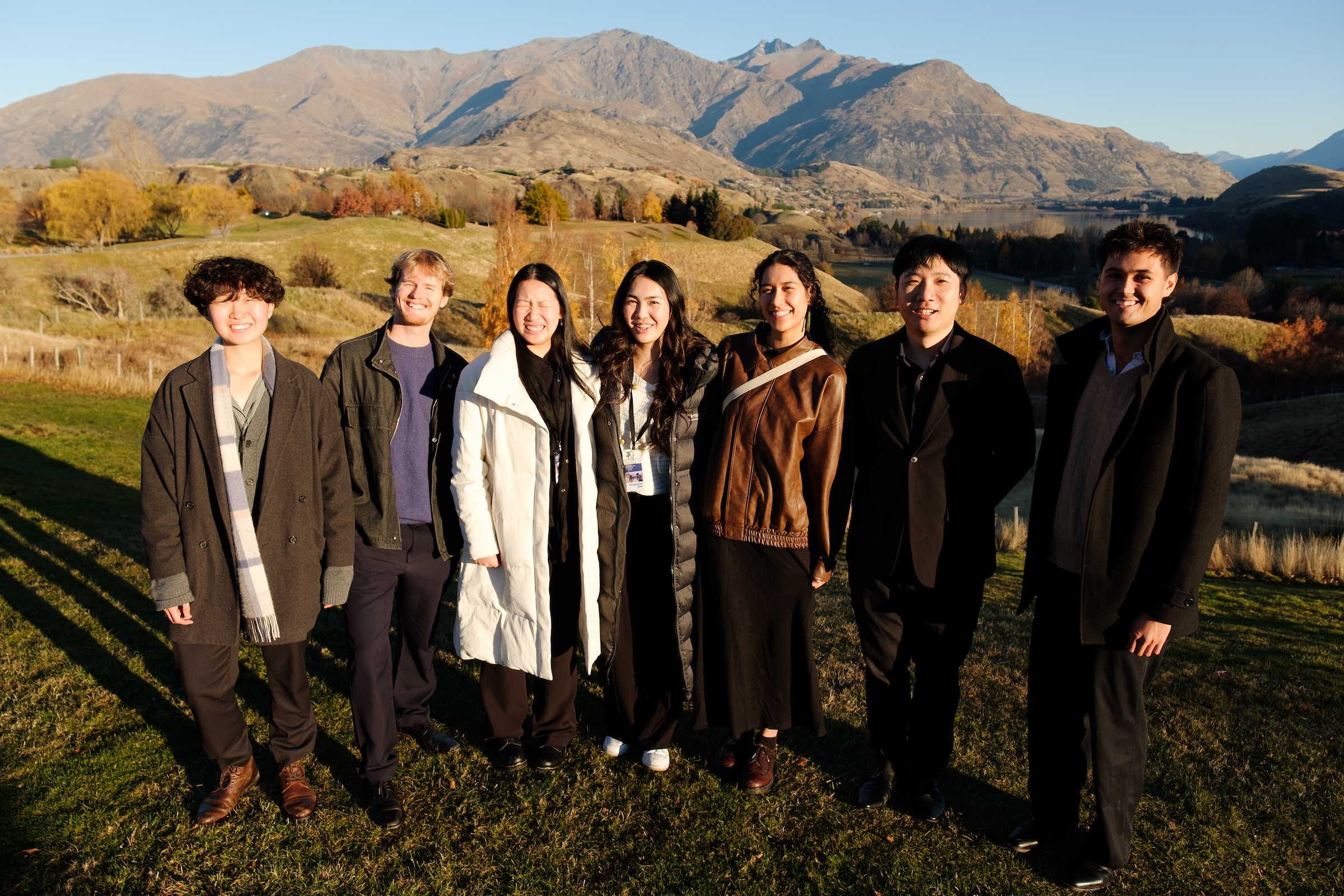


The Michael Hill International Violin Competition Fellowship programme has been developed to encourage and support New Zealand-based emerging violinists who are studying at a high-performance level with the intention of making a career as a performer.
In 2026, six fellows, including a collaborative pianist, were hand-picked to benefit from an accelerated enrichment and engagement programme alongside the 2026 Michael Hill International Violin Competition.
In addition to attending rehearsals and performance heats throughout the competition, these Kiwi musicians took part in masterclasses led by Competition judges, be given the opportunity to rehearse and perform alongside competitors and other leading New Zealand musicians and will deliver outreach programmes in Queenstown and Auckland.
The Fellows received extended ‘behind the scenes’ professional training including writing programme notes, presenting the popular pre-concert Insiders Guide talks, score-reading for live streaming sessions and contributing social media content and materials for our highly anticipated Keep Up with the Play daily blog.
The 2026 Fellowship programme was led by James Jin and generously supported by The Adam Foundation.
Here’s what they shared about their 2026 Fellowship experience….
Lorna Zhang, violin (Auckland)
I truly just want to express my gratitude for having this opportunity available to us. I much more out of it than I expected. The most meaningful thing to me over those two and more weeks was to be able to listen to everyone’s performance, and talk to the competitors, get to know their stories. Pursuing music can be lonely and this helped me so much, mentally, to know that there are other passionate young musicians around us.
Learning about the backstage work made me a lot more appreciative of what goes behind the scenes, too. There were many long days and new responsibilities. I felt that the team was looking out for us and making sure we weren’t left alone doing too much that we can’t deal with.
Mana Waiariki, violin (East Coast/Wellington)
The Takács violin masterclass was my no. 1 highlight! The Takács Quartet have always been my idols since forever and I felt like it was the stars aligning that Ed Dusinberre had been selected as an International Judge and his partner Harumi Rhodes came along to Aotearoa as well. The way they are both able to articulate their artistic vision without forcing it was an experience I have never encountered in my years of learning. This, along with the James Ehnes masterclass, were extremely valuable and was such a treat to have been a part of.
The farm visit was really fun! It was nice to get to know the (very jet lagged and tired) competitors in a casual setting. I also thought it was a great pick to show our international whānau a slice of the beautiful agriculture we have in Aotearoa – I bet they’d never seen a sheep being shorn before!
It was great meeting so many competitors of a similar age with the same passion but on a completely different life path. These competitors are living my dream life right now and at times it was heartbreaking knowing I may not ever end up to their level ever, but it also assured me that I am finding my own ways to contribute to this community meaningfully and we are all indeed on our own paths of life.
Best thing about the experience was hanging out with the rest of the fellows and spending time with them. I had always interacted with all these fellows in passing so it was really nice to actually spend a decent amount of time getting to know each other beyond surface level. I also liked how busy we all were! Between the community engagements, masterclasses, MC-ing, score reading for the livestream, Insider’s Guide, and personal practice, yet it never felt too overwhelming. I think it’s because we had such a variety of things to do that kept us on our toes and working very hard.
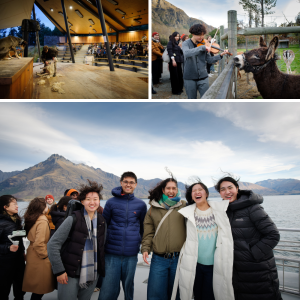
Madeleine Xiao, collaborating piano (Auckland)
There were so many highlights throughout my time with the Fellowship Programme at the 2026 MHIVC, but one of the greatest was the opportunity to build meaningful connections with some of the most talented young musicians in the industry. I loved the collaborative nature of the programme, from playing with competitors for masterclasses, to sharing music, conversations, and experiences with musicians from around the world.
I really enjoyed the pre-concert talks and was incredibly fortunate to receive two masterclasses (for seven violinists total!) from James Ehnes, which provided invaluable artistic insights. Another particularly memorable experience was spending time with members of the jury outside the competition setting. One evening, we shared dessert and simply talked about their musical journeys and experiences. It was deeply inspiring to see that despite their extraordinary talent, achievements, and knowledge, they are also generous, down-to-earth people with stories and lessons to share.
The Fellowship Programme further deepened my passion for collaborative performance and reinforced my desire to pursue a career that combines both solo and chamber music. Working so closely with exceptional violinists and artists from around the world showed me the unique joy of creating music with others and the meaningful relationships that can be formed through collaboration. As the inaugural piano fellow, I was given the opportunity to work in a highly professional and fast-paced environment, supporting multiple competitors and adapting to different artistic personalities and musical approaches. This experience strengthened not only my collaborative skills but also my confidence as a musician, and gave me valuable insight into the professional world of chamber music and international competitions.
It has been an incredibly formative experience at this stage of my career and has further motivated me to continue developing as a versatile musician and collaborative artist.
One of the biggest lessons I learned was just how many people and moving parts are involved behind the scenes of a world-class competition. Being part of the backstage team gave me a new appreciation for the organisation, teamwork, and dedication required to create a seamless experience for audiences and performers alike. Musically, I learned how important adaptability and flexibility are. With very limited rehearsal time, I had to adjust quickly to different artistic approaches and respond in real time to each musician. After hearing so much violin playing over the two weeks, I also feel my ears have developed further, giving me a clearer understanding of what distinguishes a good performance from a truly great one. I also gained a deeper understanding of the scale and complexity of presenting a major international competition. Through score-reading for livestreams, page-turning, writing blogs, creating social media content, and working closely with the backstage team, I saw how much coordination is required to bring an event of this scale together, from Queenstown through to the finals in Auckland.
Perhaps what I enjoyed most was the extraordinary sense of camaraderie throughout the programme. Despite the pressure of an international competition, there was a genuine atmosphere of encouragement, generosity, and friendship among the fellows, faculty, and staff. The relationships formed over the fortnight and the opportunity to learn from so many exceptional musicians will stay with me forever.
Overall, the programme was exceptionally well designed and offered a wonderful balance of performances, mentorship, and social connection.
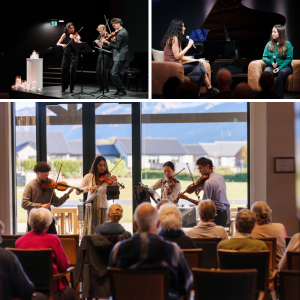
Archie Lamont-Bowden, violin (Auckland)
Thank you so much for the past few weeks—being able to follow the competition so closely has been incredibly inspiring.
A highlight of the experience was being able to talk about life and music with the competitors themselves—learning a bit about their journeys and gaining insight to what they hope a career in violin playing will look like for them. This, of course, relates to my own pathway as a musician giving me the opportunity to reflect and talk about where I want to take my violin playing in the future. The competition itself and the results of each round taught me what classical institutions (schools and competitions) might look for when assessing the technique and style of performers. I could see that a balance of excellent, classy technique with individualism and musicality was essential. In this way, it lit up a pathway for my practise towards becoming a “classy” violinist but also revealed boundaries to be broken in establishing myself as a unique, individual “artist.”
Esther Oh, violin (Auckland)
Playing chamber music with the competitors at the gala concert and also at the outreach concerts were highlights. As was bonding together and becoming friends through planning and stressing out together in the process of planning the masterclasses and outreach concerts with the local students. Realising that we are all about the same age and have the same complaints even(!) and that I am not so different from them because we were able to make great chamber music together, was also a highlight.
I gained insights from some of the world-leading conservatories for violin, and became friends with some of the kinds of people that I might meet when I start postgraduate studies in a place like those. I experienced first hand what it takes to prepare repertoire for an international-level competition, and also learned lessons on stamina, pacing, and patience when navigating group events with fellows and competitors. I have never taken a chamber music masterclass before, much less with Curtis and Hanns Eisler students, and this was a full-circle moment for me because the students were from my old high school. It was eye-opening to experience being ‘on the other side’, and gives me confidence for when I inevitably do more of these things in the future.
I liked that people explained the kaupapa / philosophy of the Competition and of Sir Michael Hill’s vision, especially concerning the host families and the facilitating of connections and long-term friendships. I appreciated the focus on giving back to the community and the environment, and the humanity and warmth with which the staff approached their projects. I felt like we belonged to something bigger and that gave me a deep sense of meaning to this violin competition. I also appreciated the trust that the staff put into each of us, even though it was our first time doing many of these things.
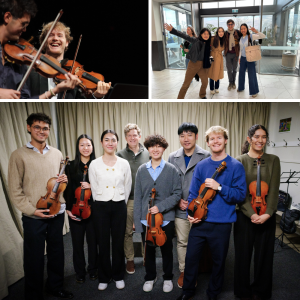
Indiana Williamson, violin (Hamilton)
One of my many highlights was the outreach work in Ōtara. It was such a rewarding experience working alongside some of the competitors and seeing how excited and engaged the kids were. Watching the competitors share their experiences and inspire the students was really special.
The Fellowship gave me a great insight into what a career in music can look like. Being able to spend time around world-class performers and industry professionals was both inspiring and motivating, and it truly boosted my desire to pursue music professionally.
I gained a much better understanding of everything that goes on behind the scenes to make an international competition like this happen. It also gave me a new appreciation for the level of preparation and dedication required to compete at such a high level.
I loved how much access we had to the competitors, jurors, and guest artists. Being able to observe rehearsals, masterclasses, performances, and outreach events up close made for an incredibly valuable learning experience.